Not every dental issue is easy to notice in the mirror. Sometimes, the problem is not about crooked teeth but how your upper and lower jaws align. You may feel that your bite is slightly off, or your profile looks different from the side. These small signs can point to deeper alignment concerns that need early attention.
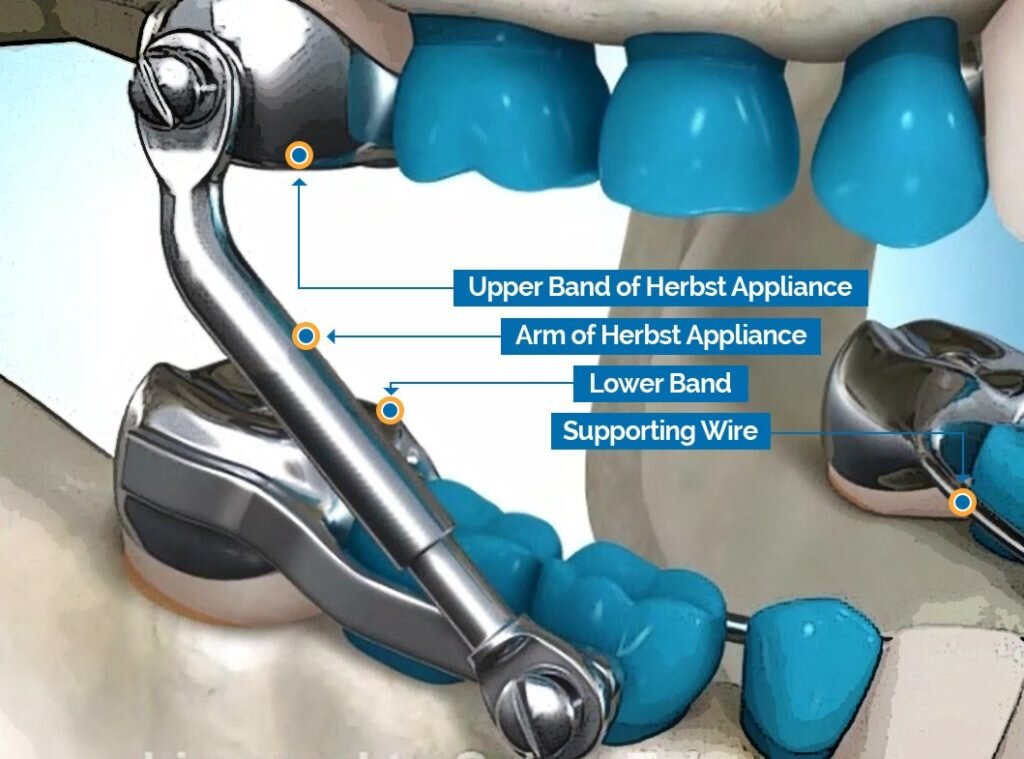
In many such cases, an orthodontist may bring up the option of a Herbst appliance during consultation, especially when jaw positioning needs correction rather than just tooth movement. This often surprises patients who expected a simple braces solution.
Key Takeaways
• A Herbst appliance is used to correct jaw alignment, not just teeth
• It is commonly recommended for growing children and teens
• It works continuously since it is fixed inside the mouth
• Early treatment can prevent more complex procedures later
• Not everyone needs it, as treatment depends on individual cases
Understanding What the Herbst Appliance Does
A Herbst appliance is designed to fix a specific type of bite issue where the lower jaw sits too far back compared to the upper jaw. This condition is often called an overbite, but not all overbites require this treatment.
The appliance gently pushes the lower jaw forward over time. This helps guide proper jaw growth, especially in younger patients whose bones are still developing. Unlike removable devices, it stays in place and works throughout the day and night.
Signs That You Might Need One
It is not always obvious when a Herbst appliance is needed. However, there are some common signs to watch for. If your upper teeth stick out too far, or if your chin appears slightly pulled back, it could indicate a jaw alignment issue.
You might also experience difficulty in chewing or notice that your teeth do not meet properly when you close your mouth. In children, mouth breathing and speech changes can sometimes be linked to these alignment problems.
Age Plays an Important Role
Timing matters a lot with this type of treatment. The Herbst appliance is most effective during growth years. This is because it works by guiding jaw development rather than forcing a correction after growth is complete.
For adults, the same issue may require different approaches, sometimes involving surgery or more complex orthodontic treatments. That is why early evaluation is often recommended.
How It Feels During Treatment
The idea of a fixed appliance can feel intimidating at first. However, most patients adjust within a few days. There may be slight pressure or tightness in the beginning, but this usually fades as the mouth adapts.
Eating and speaking may feel different initially, but normal routines return quickly. Regular follow-ups ensure that the appliance is working as expected.
Benefits beyond Just Appearance
While many people focus on how their smile looks, the Herbst appliance offers more than cosmetic improvement. Correcting jaw alignment can improve chewing efficiency and reduce strain on jaw joints.
It can also help in preventing uneven tooth wear and long-term dental issues. Addressing the root cause early often leads to more stable and lasting results.
Situations Where It May Not Be Needed
Not every patient with an overbite requires a Herbst appliance. Mild cases can often be treated with braces or aligners alone. Each treatment plan depends on the severity of the issue and the patient’s age.
A proper assessment helps determine whether this appliance is necessary or if a simpler option can achieve the same results.
What to Expect After Treatment
Once the jaw alignment improves, braces are often used to fine-tune the position of the teeth. This combination approach ensures that both structure and appearance are corrected.
Retention is also important after treatment. It helps maintain the new alignment and prevents the teeth from shifting back.
Conclusion
Deciding whether you need a Herbst appliance is not something you can figure out on your own. It depends on how your jaw and teeth work together. While the appliance may not be required for everyone, it plays a crucial role in correcting certain bite problems at the right stage of growth.
Understanding the signs and acting early can make a big difference. With the right guidance and timely treatment, achieving a balanced bite and a confident smile becomes much easier.