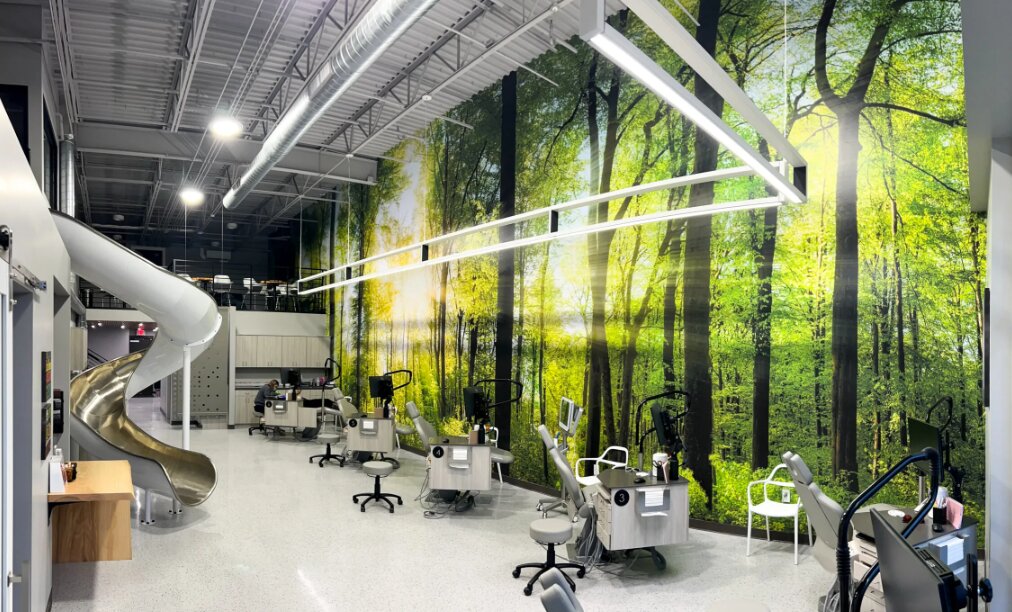
Walk into an orthodontic office today and you will find a very different environment from the one many adults remember. Behind the friendly faces and comfortable waiting rooms, a quiet revolution in technology has reshaped nearly every part of how orthodontic care is delivered. These advances have made treatment more comfortable, more precise, and more predictable, and understanding them helps patients appreciate the care they receive.
Perhaps the most noticeable change is the disappearance of the messy molds that older patients recall with a particular dread. Biting into a tray of putty to capture an impression of the teeth was unpleasant and sometimes triggered a gag reflex. Today, that step has largely been replaced by handheld digital scanners that capture a precise three dimensional image of the teeth in minutes, comfortably and accurately.
These digital scans do far more than spare patients an unpleasant experience. They feed into sophisticated planning software that allows the orthodontist to map out an entire course of treatment on a computer. The provider can visualize how the teeth will move, plan each stage in detail, and in many cases generate a projected image of the final result before treatment even begins. A modern local orthodontic office uses these tools to plan with a precision that was not possible in earlier decades.
The ability to preview the expected outcome is genuinely valuable for patients. Seeing a simulation of how your teeth should look at the end of treatment helps you understand the plan and commit with confidence. Rather than simply trusting that things will work out, you can see the goal you are working toward, which makes the months of treatment feel more concrete and motivating.
Imaging technology has advanced as well. Modern X ray systems and three dimensional imaging give orthodontists a detailed view of the roots, the jaw, and structures beneath the surface, all with lower radiation than older methods. This deeper insight supports more accurate diagnosis and planning, allowing providers to anticipate challenges and tailor treatment to each patient's specific anatomy.
The appliances themselves have benefited from technological progress. Brackets are smaller and more refined, and the wires used in modern braces are made from advanced materials that apply gentle, consistent pressure. Clear aligners, manufactured from digital plans with remarkable precision, represent another technology driven option that did not exist in its current form a generation ago. These improvements translate into more comfortable and often more efficient treatment.
Behind the scenes, practice management technology has improved the patient experience in less visible but meaningful ways. Digital records, automated appointment reminders, and streamlined scheduling make the logistics of treatment smoother. These systems help a practice run efficiently, reducing wait times and keeping treatment organized, which matters over the many months that orthodontic care involves.
Communication technology has also enhanced how practices stay connected with patients. Many offices now offer convenient ways to reach the team, ask questions, and manage appointments digitally. For busy patients and families, this connectivity removes friction and makes it easier to stay engaged with treatment, get answers promptly, and handle the occasional issue without unnecessary hassle.
It is important to keep all this technology in perspective, however. As impressive as these tools are, they support rather than replace the expertise of the orthodontist. The best outcomes still come from a skilled provider using these advanced tools well, applying their judgment and experience to interpret the data and craft the right plan. Technology in capable hands is the ideal combination, not technology alone.
For patients, the practical upshot of all this progress is an experience that is more comfortable and more reassuring than orthodontic treatment used to be. The unpleasant molds are gone, the planning is more precise, the appliances are gentler, and the logistics are smoother. These advances have removed many of the friction points that once made people hesitant about treatment.
It is also worth appreciating how these technologies work together rather than in isolation. The digital scan feeds the planning software, the planning informs the appliances, and the practice management systems keep everything coordinated, so the patient experiences a smooth, connected process rather than a series of disjointed steps. This integration is part of what makes modern treatment feel so much more efficient than it once did. Behind every comfortable appointment and predictable result is a web of tools quietly doing their part, all orchestrated by a skilled team that knows how to use them well in service of your healthier smile.
When you choose where to receive care, it is reasonable to ask a practice about the tools and methods they use, while keeping in mind that the people matter most. A practice that has invested in modern technology and pairs it with an experienced, caring team offers the best of both worlds. The gadgets are not the point in themselves, but they are a sign of a practice committed to delivering comfortable, precise, up to date care. That combination is what you are really looking for when you set out to find the right place to straighten your teeth.
If your impression of the orthodontic office is shaped by memories from years ago, it is worth seeing how much has changed. The modern orthodontic office combines a welcoming environment with technology that makes treatment more comfortable, precise, and predictable than ever. A consultation is a great way to experience these advances first-hand and to see how they can make your own journey to a healthier smile a smoother one.